
Polyneuropathy means that many peripheral nerves are not working as they should. These nerves carry messages between the brain and spinal cord and the rest of the body. When they are damaged, the result may be numbness, tingling, burning pain, weakness, balance problems, or changes in automatic body functions such as blood pressure and digestion.
The word can sound like a single diagnosis, but it is really an umbrella term. There are many forms of polyneuropathy, and they do not all behave in the same way. Some develop slowly over years. Others appear over days or weeks and need urgent assessment. Some mainly affect sensation; others affect movement, automatic body functions, or a mixture of all three.
Symptoms alone cannot confirm polyneuropathy. Burning feet, tingling, numbness, and weakness have several possible causes, including problems outside the peripheral nerves. A clinician uses the pattern of symptoms, an examination, and selected tests to work out what is happening and why. [1] [2]
Key takeaways
- Polyneuropathy affects many peripheral nerves, often on both sides of the body.
- The most common pattern starts in the toes and feet because the longest nerves are often affected first.
- There are many possible causes. Diabetes is common, but medicines, alcohol, nutritional problems, kidney disease, immune conditions, infections, inherited disorders, and toxins can also be involved.
- Treatment usually has two goals: address the cause when possible, and reduce symptoms while protecting movement, balance, skin, and daily function.
- Rapidly worsening weakness, trouble breathing or swallowing, or sudden one-sided neurological symptoms need urgent medical assessment.
What does polyneuropathy mean?
The name has three parts: poly means many, neuro refers to nerves, and pathy means disease or damage. Put together, polyneuropathy describes a condition involving many nerves.
These are peripheral nerves: the network outside the brain and spinal cord. They connect the central nervous system to the skin, muscles, blood vessels, glands, and internal organs. A problem in the brain or spinal cord is therefore different from a peripheral neuropathy, even though both can cause symptoms such as weakness or altered sensation. [1]
Peripheral neuropathy is the wider term for damage to one or more peripheral nerves. Polyneuropathy is used when many nerves are affected. A single trapped nerve, such as carpal tunnel syndrome, is a mononeuropathy rather than a polyneuropathy. The distinction matters because the pattern helps guide the search for a cause.

How polyneuropathy affects the nerves
Nerves contain long fibers called axons. Many axons are wrapped in myelin, an insulating layer that helps electrical signals travel efficiently. Some polyneuropathies mainly damage axons. Others mainly damage myelin. Many affect both to some degree. Nerve-conduction studies and electromyography can help clinicians distinguish these patterns when that information is needed. [1] [2]
The symptoms depend on which nerve fibers are involved:
| Nerve type | What it does | Possible effects of damage |
|---|---|---|
| Sensory | Carries information about touch, pain, temperature, vibration, and body position. | Numbness, tingling, burning, electric or stabbing pain, unusual sensitivity, or reduced awareness of injury. |
| Motor | Carries signals that control voluntary muscles. | Weakness, cramps, muscle twitching, difficulty lifting the front of the foot, or loss of muscle bulk. |
| Autonomic | Helps control functions that happen automatically. | Dizziness on standing, altered sweating, digestive or bladder symptoms, sexual dysfunction, or problems tolerating heat. |
Common symptoms
Polyneuropathy can feel very different from one person to another. Some people have mild numbness. Others have pain, weakness, or balance problems that interfere with sleep and daily activity. The presence, absence, or intensity of pain does not by itself show how much nerve damage is present.
Reduced reflexes, especially at the ankles, are a common examination finding in distal symmetric polyneuropathy. Large sensory fibers help the brain know where the feet and joints are. When that information becomes unreliable, balance may be worse in the dark or with the eyes closed. Small sensory fibers carry pain and temperature signals, so small-fiber damage can cause burning pain or reduced awareness of heat even when routine nerve-conduction studies are normal. [2]
Symptoms are not a diagnosis
Burning feet, tingling, numbness, weakness, and poor balance can come from many conditions. Their presence does not prove polyneuropathy, and their absence does not rule it out. A clinical assessment is needed to identify the pattern and exclude other causes.
Where symptoms usually begin
The most common form is distal symmetric polyneuropathy. “Distal” means farthest from the center of the body, and “symmetric” means the pattern is broadly similar on both sides. Because the nerves running to the toes are among the longest in the body, symptoms often begin in the toes or soles of the feet before moving upward. The fingers may become involved later, after symptoms have progressed farther up the legs. [1] [2]
Clinicians sometimes call this a “stocking-and-glove” distribution: the affected areas can resemble the parts covered by long socks and, later, gloves. That phrase describes a pattern, not a cause. A different pattern—such as symptoms mainly on one side, prominent weakness from the beginning, or problems starting around the torso—may point toward another kind of nerve disorder and deserves prompt assessment.

What causes polyneuropathy?
Polyneuropathy has many possible causes. A clinician looks at the timing and pattern of symptoms, medical and family history, medicines, alcohol use, nutrition, work or environmental exposures, and other health conditions. More than one factor may be present at the same time.
Common or well-recognized causes
- Diabetes and abnormal glucose metabolism. Diabetes is a leading cause of distal symmetric polyneuropathy. Even when a person has diabetes, clinicians may still consider other possible causes, especially if the pattern is unusual. [5]
- Alcohol-related nerve damage. Long-term heavy alcohol use can affect nerves directly and may occur alongside nutritional deficiency.
- Nutritional imbalance. Vitamin B12 deficiency is a recognized cause. Excess vitamin B6 can also damage nerves, which is one reason high-dose supplements should not be taken as a self-directed neuropathy treatment. [1]
- Kidney, liver, thyroid, and other metabolic disorders. These can affect nerve health directly or change the chemical environment around nerves.
- Medicines and cancer treatment. Some chemotherapy drugs and a smaller number of other medicines can cause neuropathy. Risk depends on the specific drug, dose, duration, and the person receiving it. Never stop a prescribed medicine without discussing it with the prescriber.
Other important possibilities
Autoimmune and inflammatory diseases can attack peripheral nerves or their myelin. Infections such as HIV, hepatitis C, Lyme disease, shingles, and certain infection-triggered immune responses may be relevant in the right clinical setting. Some cancers and abnormal blood proteins can be associated with neuropathy. Heavy metals, industrial chemicals, and other toxins are less common but important when there is a plausible exposure. Inherited neuropathies, including Charcot–Marie–Tooth disease, are considered when the pattern, age at onset, foot shape, or family history suggests them. [1] [2]
Cause lists can be misleading if they are treated like a self-diagnosis checklist. The same symptom may fit several conditions, while a possible cause found online may have nothing to do with an individual case. The useful question is not only “Can this cause neuropathy?” but “Does the whole clinical pattern make this cause likely?”
What does idiopathic mean?
Idiopathic means that no clear cause has been identified after an appropriate evaluation. It does not mean that symptoms are imaginary, and it does not mean that no biological cause exists. It means the cause is not currently known.
Some slowly progressive, sensory-predominant neuropathies remain unexplained even after history, examination, electrodiagnostic testing, and high-yield blood tests. Clinicians may describe these as chronic idiopathic axonal polyneuropathy. Follow-up still matters: a change in the pattern, faster progression, new weakness, or new systemic symptoms may justify another look. [2]
Types of polyneuropathy
Doctors classify polyneuropathy in several overlapping ways. The labels are useful because they narrow the possible causes and help select tests; they are not competing diagnoses.
By speed
Acute neuropathy develops over days. Subacute disease evolves over several weeks. Chronic neuropathy develops over months or years. Rapid onset raises different concerns from a stable, slowly changing pattern.
By nerve structure
Axonal neuropathy mainly damages the nerve fiber. Demyelinating neuropathy mainly damages its insulation. Electrodiagnostic testing can help tell them apart, although mixed patterns occur.
Clinicians also describe whether sensory, motor, or autonomic fibers are most affected, and whether symptoms are length-dependent, symmetric, or patchy. Acute-to-subacute onset, asymmetry, a pattern that is not length-dependent, prominent motor symptoms, or wider signs of systemic disease should prompt urgent neuromuscular assessment because some causes are treatable and time-sensitive. [2]
How is polyneuropathy diagnosed?
There is no single test that answers every neuropathy question. Diagnosis starts by confirming whether the symptoms and examination fit a peripheral nerve pattern. The next task is to describe that pattern and look for a cause that would change management.
A typical diagnostic pathway
- History. The clinician asks when symptoms began, how they spread, what makes them better or worse, and whether there is pain, weakness, imbalance, or autonomic change. Medicines, alcohol, diet, infections, medical conditions, toxin exposure, and family history can all matter.
- Neurological examination. This may assess strength, reflexes, walking, balance, coordination, and different kinds of sensation such as pinprick, temperature, vibration, and joint position.
- Focused tests. Blood tests are chosen to look for common or treatable causes. Nerve-conduction studies and EMG may help confirm and classify the neuropathy.
- Additional investigation when needed. Genetic testing, skin biopsy, lumbar puncture, imaging, autonomic testing, or rarely nerve biopsy may be appropriate when the pattern points to a specific question.

Nerve-conduction studies measure how strongly and quickly electrical signals travel along selected nerves. Electromyography (EMG) uses a fine needle electrode to examine electrical activity in muscles. Together, they can help distinguish an axonal from a demyelinating process and separate neuropathy from some muscle or nerve-root disorders. They mainly assess larger nerve fibers, so a person with suspected small-fiber neuropathy may have normal routine results. [1] [2]
What blood tests may be used?
Testing should fit the person and the neuropathy pattern. It is not a fixed panel that everyone needs. For distal symmetric polyneuropathy, high-yield screening commonly includes a complete blood count; electrolytes; kidney and liver function; fasting glucose and hemoglobin A1c; vitamin B12, sometimes with a related marker called methylmalonic acid; and serum protein electrophoresis, which looks for certain abnormal blood proteins. Thyroid or other tests may be added when the history or local guidance supports them. [2] [4]
| Test or assessment | What it helps answer | Why it may be used |
|---|---|---|
| Glucose and A1c | Is diabetes or abnormal glucose regulation present? | Glucose-related neuropathy is common, but diabetes should not automatically be assumed to explain an atypical pattern. |
| Vitamin B12 | Could a treatable deficiency be contributing? | B12 deficiency is a recognized cause of peripheral nerve damage. |
| Kidney and liver tests | Is organ dysfunction changing the chemical environment around nerves? | Advanced kidney or liver disease can be associated with neuropathy. |
| Serum protein electrophoresis | Is an abnormal protein present? | Some monoclonal proteins are associated with neuropathy and may need further evaluation. |
| NCS and EMG | Where is the problem, and does it look axonal or demyelinating? | Useful when confirmation or classification will guide the diagnosis; not required in every typical case. |
A lumbar puncture, nerve biopsy, or broad genetic panel is not routine for every person with tingling feet. These tests have specific roles. For example, spinal fluid may help when an inflammatory neuropathy is suspected; genetic testing may be useful when the examination and family history suggest an inherited disorder; and nerve biopsy is generally reserved for selected questions such as suspected nerve vasculitis. [1] [4]
How is polyneuropathy treated?
Treatment is built around the cause, the symptoms, and the effect on daily life. For many people, it has two main goals: treat or manage the underlying cause when possible, and reduce symptoms while preserving safety and function. A treatment that is right for one form of polyneuropathy may be ineffective or unsafe for another.
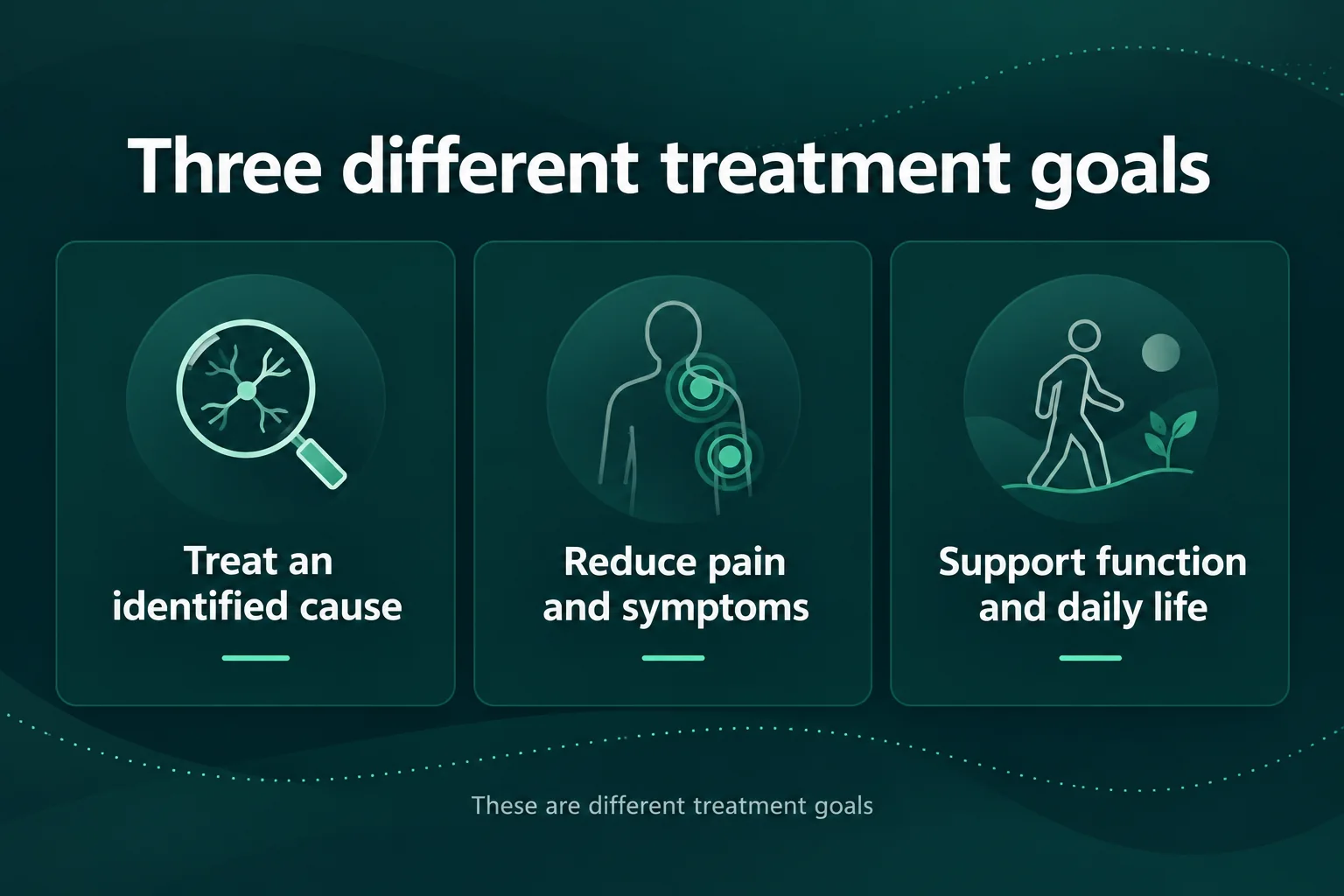
1. Treating an established cause
This may mean improving glucose management in diabetes, correcting a confirmed deficiency, changing a causative medicine with the prescriber, reducing a harmful exposure, treating an infection, or using specialist immune treatment for a diagnosed inflammatory neuropathy. These are cause-specific decisions. Immune therapies such as intravenous immunoglobulin, plasma exchange, corticosteroids, or other immunosuppressive medicines are not general treatments for numb or painful feet; they are used for selected immune-mediated conditions. [1]
2. Managing neuropathic pain
Nerve pain often responds differently from pain caused by a strain or inflamed joint. Guidelines for painful diabetic polyneuropathy support several medication classes, including certain antidepressants, gabapentinoids, tricyclic antidepressants, and sodium-channel blockers. These medicines can reduce pain for some people, but the average benefit is usually partial and side effects matter. Choice should consider other health conditions, sleep, mood, fall risk, cost, and patient preferences. If one class does not provide meaningful benefit or causes troublesome effects, a clinician may consider another effective class. [3]
The AAN guideline recommends against opioids for painful diabetic polyneuropathy because long-term harms can outweigh uncertain sustained benefit. Evidence from diabetic neuropathy cannot automatically be applied to every cause of neuropathic pain, so treatment still needs individual clinical judgment. This overview does not provide doses or a personal medication plan. [3] [5]
3. Supporting movement and daily function
Physical therapy can assess strength, walking, balance, and the need for an exercise plan or walking aid. Occupational therapy can help with hand function, energy use, home setup, and daily tasks. Braces may help selected people with weakness such as foot drop. Exercise research is strongest in diabetic and chemotherapy-related neuropathy, and results vary, but systematic reviews support a role for supervised movement and balance-focused rehabilitation rather than inactivity. [12]
4. Protecting feet and preventing falls
Reduced sensation can hide a blister, burn, or pressure injury. Foot care is especially important for people with diabetes or loss of protective sensation. Guidance may include checking the feet regularly, wearing well-fitting footwear, avoiding barefoot walking when injury could go unnoticed, and getting prompt help for a wound, redness, swelling, or infection. Fall prevention may involve better lighting, removing trip hazards, rails, an appropriate walking aid, and targeted strength or balance work. [5] [7]
5. Emerging or uncertain treatments
Neuropathy research includes devices, electrical stimulation, regenerative approaches, and many drugs and supplements. “Promising” does not mean proven, and evidence for one specific neuropathy cannot be assumed to apply to another. Supplements are not automatically safe; excessive vitamin B6 is itself a recognized cause of neuropathy. A claimed natural cure should be treated with caution, especially if it promises nerve regrowth, advises stopping prescribed care, or sells a product as the answer. [1]
A useful treatment question
Ask what the treatment is meant to change: the underlying disease, pain, strength, balance, sleep, or safety. A treatment can be worthwhile without repairing the nerve itself, but the goal should be clear.
Can damaged nerves heal?
Sometimes—but the answer depends on the cause, the kind of damage, how severe it is, and how long it has been present. Peripheral axons can regrow under some conditions, but recovery is slow and may be incomplete. If an ongoing cause can be removed or controlled, further damage may slow and symptoms may improve. Correcting a deficiency or stopping a causative exposure early, under medical guidance, may offer a different outlook from a long-standing inherited neuropathy or severe loss of nerve fibers.
Symptom change is not always a simple measure of nerve repair. Pain can improve while numbness remains. Strength may recover with rehabilitation even when nerve tests stay abnormal. In other cases, the main goal is stability, symptom control, and prevention of complications. No general timeline can predict an individual recovery. [1] [9]
Living with polyneuropathy
Daily management works best when it responds to the problems a person actually has. Someone with pain but normal strength needs a different plan from someone with foot drop and frequent falls. The following ideas are discussion points, not a universal prescription.
Practical points to discuss with your care team
- Choose movement that matches your strength, balance, heart health, and foot condition; ask for physical therapy guidance if you feel unsafe.
- Review falls, near-falls, or new difficulty on stairs rather than quietly adapting around them.
- Use supportive, well-fitting footwear and check inside shoes if reduced feeling makes pressure or small objects hard to detect.
- Inspect numb skin and feet regularly when advised, particularly with diabetes or loss of protective sensation.
- Tell the clinician if pain disrupts sleep, mood, concentration, or activity; these effects can influence treatment choices.
- Pace demanding tasks, but avoid assuming that all discomfort means damage. A therapist can help find a workable activity level.
- Keep an accurate medicine and supplement list. Include over-the-counter vitamins and the doses.
If autonomic nerves are involved, practical advice may include rising slowly, hydration or compression strategies, meal adjustments, or treatment for bladder and digestive symptoms. These measures can be inappropriate for some heart, kidney, or blood-pressure conditions, so autonomic symptoms deserve individual guidance rather than a generic home plan.
When to seek medical care
Arrange a medical assessment for new, persistent, or worsening numbness, tingling, burning pain, weakness, balance change, or loss of sensation. Seek prompt care for a foot wound that is not healing, particularly if you have diabetes or reduced feeling. Early assessment can identify treatable causes and reduce the chance of unnoticed injury. [7] [8]
Get urgent help for rapid or severe neurological change
Seek urgent or emergency assessment for weakness that develops or worsens over hours or days; trouble breathing, swallowing, or speaking; inability to walk or lift a limb; fainting or severe new blood-pressure symptoms; or sudden one-sided weakness, facial droop, confusion, or speech difficulty. These symptoms can have causes other than polyneuropathy, including Guillain–Barré syndrome or stroke, and should not be self-diagnosed online. Use your local emergency number for severe or rapidly progressing symptoms. [2] [11] [13]
Questions to ask your doctor
- Does my examination fit polyneuropathy, or could something else explain the symptoms?
- Which nerve types seem to be affected?
- Does the pattern look length-dependent and symmetric, or is anything atypical?
- Which causes are most plausible in my case?
- Which tests are likely to change the diagnosis or treatment?
- Do I need nerve-conduction studies, EMG, or referral to a neurologist?
- What is the goal of each treatment: treat the cause, reduce pain, improve function, or prevent injury?
- What changes should make me seek care sooner?
- Would physical therapy, occupational therapy, foot care, or a falls assessment help me?
- When should we review whether the plan is working?
Frequently asked questions
Is polyneuropathy the same as peripheral neuropathy?
Polyneuropathy is one form of peripheral neuropathy. Peripheral neuropathy can affect one nerve, several separate nerves, or many nerves. Polyneuropathy means many peripheral nerves are affected, often in a broadly symmetric pattern.
Does polyneuropathy always get worse?
No. The course depends on the cause and type. Some forms are stable, some improve when a cause is treated, and some progress. A sudden change, new weakness, or faster spread should be reassessed rather than assumed to be the expected course.
Can polyneuropathy be reversed?
Some causes are treatable and some nerve recovery is possible, especially when the problem is recognized before severe or prolonged damage. Other neuropathies cannot currently be reversed. Treatment may still reduce symptoms, protect function, and prevent complications.
Why does neuropathy often start in the feet?
Many polyneuropathies are length-dependent: the longest nerve fibers are affected first or most severely. The nerve endings in the toes are farther from their cell bodies than those in the hands, so symptoms often begin in the feet and move upward before the fingers are affected.
Can polyneuropathy affect balance?
Yes. Reduced position and vibration sense can make it harder for the brain to track where the feet are. Weakness can add to the problem. Balance may be worse in darkness, and falls or near-falls should be discussed with a clinician.
Can it affect automatic body functions?
Yes, when autonomic nerves are involved. Possible effects include dizziness on standing, altered sweating, digestive or bladder symptoms, sexual dysfunction, and heat intolerance. These symptoms have other possible causes, so they need clinical assessment.
Can a blood test diagnose polyneuropathy?
No single blood test diagnoses polyneuropathy. Blood tests look for possible causes or contributing conditions. The diagnosis rests on the history, neurological examination, and sometimes electrodiagnostic or other focused tests.
Should I take vitamin supplements for neuropathy?
Only a confirmed deficiency or another specific indication should guide replacement. More is not always better: excessive vitamin B6 can cause neuropathy. Review supplements and doses with a qualified clinician.
Sources and references
This overview prioritizes clinical guidance, peer-reviewed reviews, and national medical institutions. Sources were checked on September 23, 2026.
- National Institute of Neurological Disorders and Stroke. Peripheral Neuropathy. NIH; current page accessed 2026.
- Mirian A, Aljohani Z, Grushka D, Florendo-Cumbermack A. Diagnosis and management of patients with polyneuropathy. CMAJ. 2023;195:E227–E233. doi:10.1503/cmaj.220936.
- Price R, Smith D, Franklin G, et al. Oral and Topical Treatment of Painful Diabetic Polyneuropathy: Practice Guideline Update Summary. Neurology. 2022;98:31–43. doi:10.1212/WNL.0000000000013038.
- England JD, Gronseth GS, Franklin G, et al. Practice Parameter: Evaluation of distal symmetric polyneuropathy—role of laboratory and genetic testing. Neurology. 2009;72:185–192.
- American Diabetes Association Professional Practice Committee. Retinopathy, Neuropathy, and Foot Care: Standards of Care in Diabetes—2026. Diabetes Care. 2026;49(Suppl 1):S261–S276. doi:10.2337/dc26-S012.
- National Institute for Health and Care Excellence. Neuropathic pain in adults: pharmacological management in non-specialist settings. Clinical guideline CG173; current recommendations accessed 2026.
- Centers for Disease Control and Prevention. Your Feet and Diabetes. Updated May 15, 2024.
- Mayo Clinic. Peripheral neuropathy: Symptoms and causes. Updated May 19, 2026.
- Mayo Clinic. Peripheral neuropathy: Diagnosis and treatment. Updated 2026.
- MedlinePlus, U.S. National Library of Medicine. Peripheral Nerve Disorders. Current page accessed 2026.
- National Institute of Neurological Disorders and Stroke. Guillain–Barré Syndrome. NIH; current page accessed 2026.
- Streckmann F, Balke M, Cavaletti G, et al. Exercise and Neuropathy: Systematic Review with Meta-Analysis. Sports Medicine. 2022;52:1043–1065. PMID:34964950.
- NHS. Guillain–Barré syndrome. Current safety guidance accessed 2026.
In summary
Polyneuropathy is a pattern of damage affecting many peripheral nerves. It often begins in the feet, but symptoms, causes, speed, and outlook vary widely. A careful history and neurological examination guide focused testing. Treatment may address an underlying cause, reduce pain, support movement and balance, and prevent unnoticed injury.
If you have new or worsening numbness, pain, weakness, balance problems, or autonomic symptoms, arrange a medical assessment. Rapid weakness or problems with breathing, swallowing, speaking, or sudden one-sided function need urgent help.
Sources and editorial note
Evidence-based editorial draft using 13 traceable sources, including current clinical guidance, peer-reviewed reviews, NIH/NINDS, ADA 2026, AAN, NICE and CDC. Medical review pending.
Related reading

Restless legs or neuropathy? Similar symptoms, different assessments
Written by someone living with neuropathy: how restless legs syndrome differs from neuropathy, why the two are so often confused, how often they occur together, how each is assessed, and questions to take to your doctor.

Cold feet: nerve symptoms, circulation and when to seek help
Written by someone living with neuropathy: why feet can feel cold without being cold, when cold feet point to circulation instead, the warning signs that need urgent help, and a description aid for your appointment.

Numb hands and weak grip: neuropathy or another nerve problem?
Written by someone living with neuropathy: why numb hands and a weak grip can be a trapped nerve, a neck problem or polyneuropathy, the warning signs, and a description aid to take to your doctor.